Father of the Fairy Class
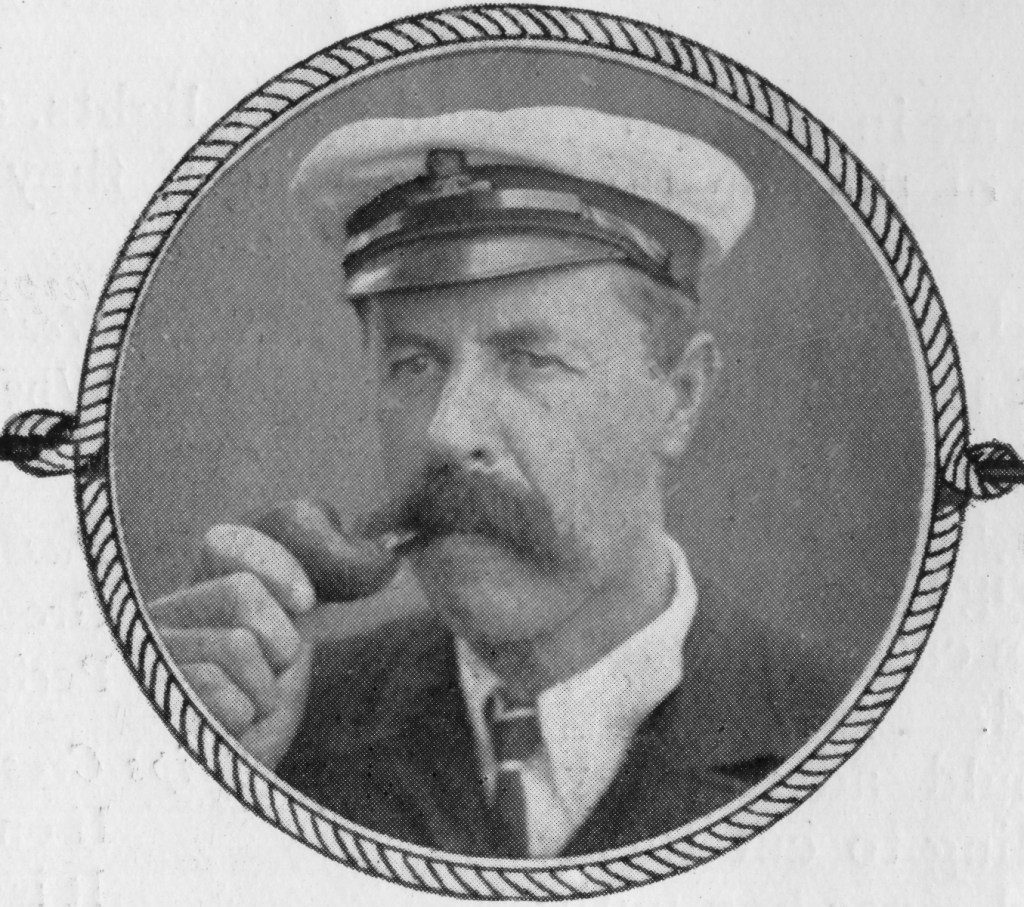
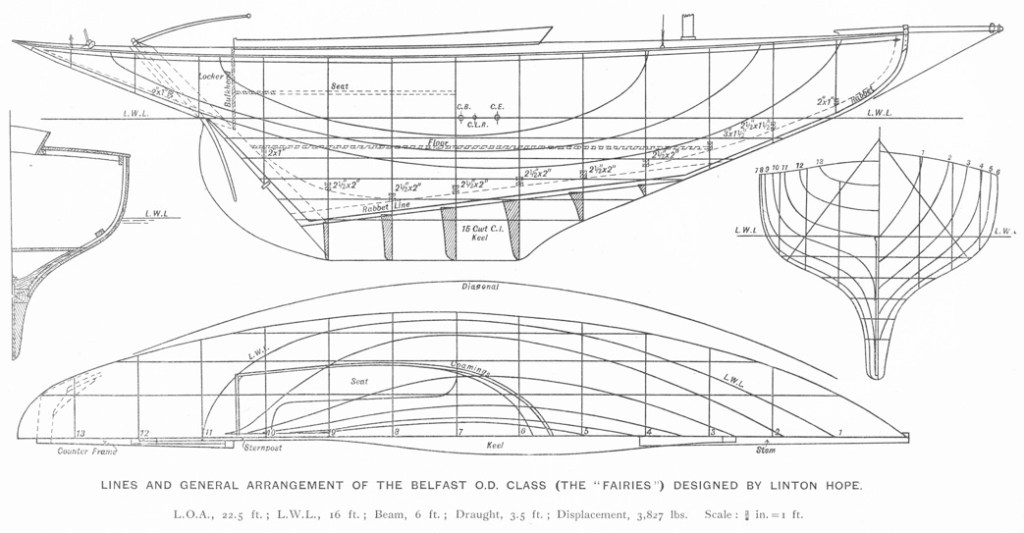
Linton C. Hope, designer of the Fairy Class yacht, was not only an accomplished and prolific naval architect, but also a highly competitive and successful yachtsman. He was a member of the Institute of Naval Architects and a Consulting Naval Architect to HM The King of the Belgians from 1913.
Hope was a member of the Royal Yacht Club de Belgique and the Royal Canoe Club, of which he was captain for several years. He was also a member of the permanent technical committee of the Boat Racing Association, of which he was a founder member. He was also a founder member of the Royal Motor Yacht Club and the Marine Motor Association.His most successful creations were the racing canoes Kismet and Haze. In 1907 he won the Royal Canoe Clubʼs International Trophy for Great Britain in Kismet. This was the first international race of its kind and up to the war the only single–handed sailing race held under international rules, the challengers coming from Belgium, Italy, France, Germany and the US. At his London design office in the Strand, Hope devoted much of his time to the study of hull shape and structure, whether in canoes, yachts or motor launches; his object was always the same, to produce lightweight hulls with great strength. In 1908 Haze was the first of the Hope canoes to show a modern shape with a flattened stern to promote planing and on a reach the whole of her fore-body, back to the mast, would plane out of the water.
The Admiralty recognized his talents and during the First World War he was made the inspector of seaplane hulls and floats on the staff of the Royal Naval Air Service with the rank of Lieutenant, RNVR. His designs, built by Pemberton-Billing Ltd (later Supermarine Aviation) became commonly known in flying boat circles as ʻLinton Hope Hulls.ʼ Two years after Linton Hopeʼs death, his circular hull section design was still in use, employed this time by R. J. Mitchell in Supermarineʼs high-speed flying boat entry for the 1922 Schneider Trophy air races. Paul Louden-Brown
Ordering the Boats
The initial procurement of a new class of boats came from the North of Ireland Yacht Club in the 1901. At this point in time the ‘NIYC’ was an up and coming organisation, the addition of an another one-design class would suit the growing demand of their members to become involved in the more competitive and balanced racing that a single design would offer.
Overview of the Boats’ Rise, Fall and Rise again
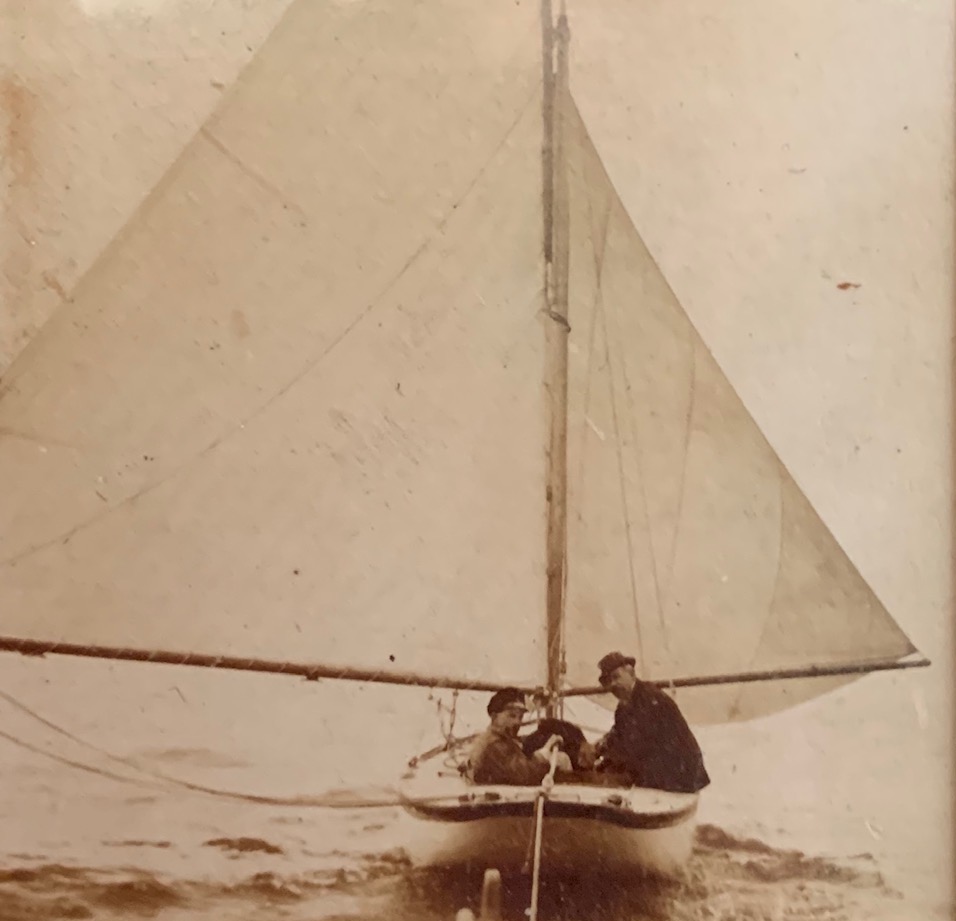
The Fairies have had their ups and downs over the decades, both internal club and class ones as well as the impact of the outside world onto the sailing communities. The first major setback being the rise of Irish Nationalism and Ulster Unionism which threatened to massively disrupt the day to day lives of the sailors, regardless of what side of the conflict that they might have sympathised with. Many of these people found themselves drawn into early 20th century politics in order to safeguard their own personal and political interests.
This problem of ‘background interference’ as it were only became more apparent and forthright with the British Empires declaration of war on the German Reich in 1914, following the events of the July crisis in Bosnia. Almost overnight, the predominantly Anglo-Irish sailors of the Enniskillen and Lough Erne Yacht Clubs were drawn up for service or volunteered. In Belfast the more Presbyterian and middle class gentlemen of the Royal North of Ireland Yacht Club, similarly through themselves into the fray with a zeal for King and Country. The aforementioned yacht club saw over 160 members serve in the Great War, 38 of them would never return, many others being permanently wounded and disfigured. These losses during the war were also felt by the Lough Erne and Enniskillen Yacht Clubs as well, with over 50 members serving throughout the war, seven not returning and many others wounded. These losses at all three clubs were compounded by the deaths of older boat hands still at home as well as younger members, boat men, local farmers, workers and ideal spectators. These losses at all three clubs of members and the crucial supporting staff and workers put enormous strain on the organisations to get sailing back on the agenda again post-war. In line with other Clubs across the United Kingdom and Empire, all sailing was suspended as the national focus shifted to total war, owners would be free to sail their boats privately if they wished, but not as an entire fleet until the war was over.
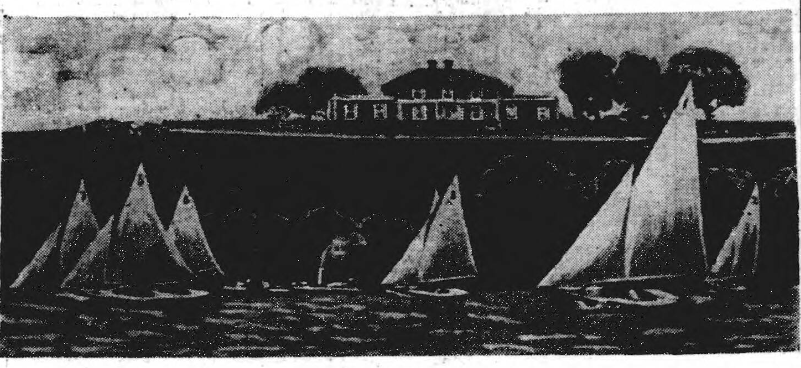
While the inter-war era would see an increase and a return to something nearing normality, another potentially greater threat would soon emerge, namely the long debated ‘Irish question.’ From the Easter Riding of 1916 to the Irish Civil war and Partition in 1922, Ireland experienced political violence, civil disobedience, economic stagnation, sectarian displacement and the break down of the preeminent power of the Anglo-Irish landed gentry. These years made for a much quieter sailing scene on the Loughs of Belfast and Erne, but the seasonal calendar still remained optimistic. With the decision for Northern Ireland to be separated from the Irish Free State and remain with Great Britain in 1922 there was a marked improvement in normal social events as the relative security of peace returned, though intermittent violence would persist for decades.
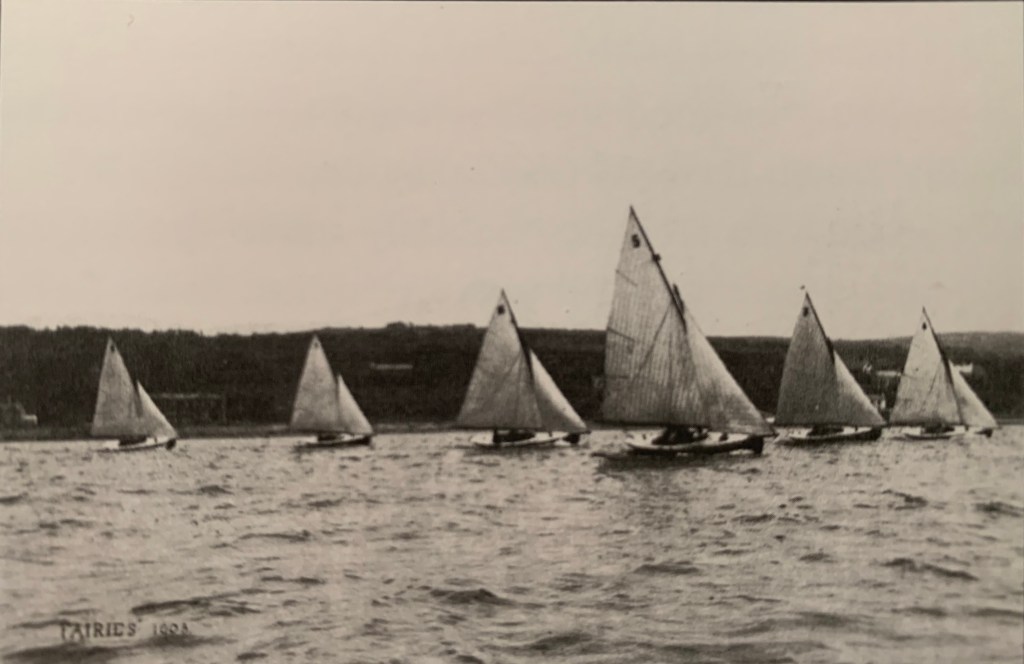
The roaring twenties and thirties saw the Enniskillen and Royal North Yacht Clubs come back into life with various newspaper entries of the period showing almost complete sailing rosters for the respective clubs weekly racing. The same could not be said for the Lough Erne Yacht Club, which had lost a number of its key members both through the war and from natural afflictions. The great weakness of being a relatively small and private organisation exclusively for the landed gentry of Upper Lough Erne had come to haunt the club in the end. The EYC Fairies had always been the property of that club, but LEYC involvement had boosted the number of boats that could be sailed with the joint membership of both Fermanagh organisations. The LEYC would decline to almost total irrelevance as the old 2-raters and Lough Erne One-Designs would be sold off or broken up, many becoming coal hulks towed up the Shannon estuaries, including the now deceased Edwards Saunderson’s beloved ‘Witch,’ a yacht that sadly met her end buried under the embankments of the ASDA supermarket carpark in Enniskillen, far from her home at Castle Saunderson in county Cavan, where she had been built. Despite this, the Fairies had a brighter future with many owners and boats having changed hands and even clubs, with sailing continuing well into the mid to late 30s, even with the Wall street crash and its devastating impact on the British and Irish economies. This 20 year peace however would soon be shattered once again with the call to war against Nazi Germany in 1939. The men of Northern Ireland’s yacht clubs volunteering once again in droves for service.
 Fairy Class Yacht Association